Venus & Jupiter: Conjunction

Caroll Alvarado
| 09-06-2026
 · Travel Team
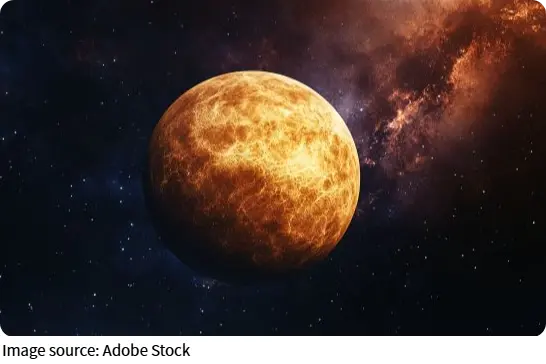
A striking astronomical event is set to brighten the evening sky worldwide: the close conjunction of Venus and Jupiter, the two brightest planets visible from Earth. This celestial meeting will unfold gradually through late May and reach its most dramatic moment around June 8–9, when the planets appear exceptionally close from our perspective.
Events like this are not physically collisions in space, but optical alignments that remind us how dynamic the solar system appears from Earth’s shifting viewpoint.
Watching the Approach: Where and When to Look
The best time to observe this planetary pairing is shortly after sunset, facing the western horizon. As twilight deepens, Venus emerges first—radiant and unmistakably bright. Soon after, Jupiter appears slightly higher in the sky, glowing with a steadier, less intense light.
Small museum with mate history and tastings; staff guide you through the ritual in under an hour.
Port vibes, gardens, noodles, and island art make Takamatsu the smoothest Shikoku entry.
Can one destination truly combine rainforest adventures and reef exploration?
Looking for history, design, and culture in one place?! Start with this landmark!
Why does this palace attract visitors from around the world?! Its beauty is unforgettable!
Want to explore something unique and unforgettable?! This hidden gem is worth finding!
Venus appears to “climb” closer toward Jupiter, while Jupiter slowly drifts nearer in apparent separation. This gradual motion is caused by the planets’ different orbital speeds around the Sun, creating a visual convergence that unfolds night by night. By early June, the two planets will already look strikingly close.
Around June 6–7, the gap becomes visually tight enough that both objects can be observed together in a small field of view. At their closest approach on June 8–9, they will be separated by only about 1.5 degrees, a distance small enough that a fingertip held at arm’s length can nearly cover both. In both hemispheres, the pair remains visible for more than two hours after sunset, offering a generous window for observation before they sink below the horizon.
A View Enhanced by Simple Optical Tools
No equipment is required to enjoy this event. Venus and Jupiter are bright enough to be seen clearly with the eye, outshining nearby stars in the twilight sky. However, binoculars can transform the experience into something far more detailed. When viewed through standard binoculars, both planets appear within the same field of vision during their closest alignment. Venus typically shines with a sharp white brilliance, while Jupiter appears slightly warmer in tone, often described as creamy or pale yellow.
With stable viewing conditions—such as resting binoculars on a tripod or leaning against a steady surface—observers may also glimpse Jupiter’s largest moons. These are the Galilean satellites: Io, Europa, Ganymede, and Callisto, first identified by Galileo Galilei in 1610. They appear as faint points of light aligned near the planet, constantly shifting positions over time as they orbit Jupiter.
A small telescope adds even more depth. Venus reveals its distinctive gibbous phase, a partially illuminated shape caused by sunlight reflecting off its thick cloud layers. Unlike stars, Venus changes its visible shape depending on its position relative to Earth and the Sun—an observation that historically helped confirm the heliocentric model of the solar system.
Why Venus Outshines Jupiter Despite Its Smaller Size
Although Venus and Jupiter may appear similar in brightness from Earth during this conjunction, their physical differences are dramatic. Jupiter is enormous—about 12 times wider than Venus—and could contain more than a thousand Venus-sized planets within its volume. Yet Venus still appears brighter in our sky.
The explanation lies in two key factors: distance and reflectivity. Venus is significantly closer to Earth, currently around 180 million kilometers away, while Jupiter sits much farther at approximately 900 million kilometers. This difference alone greatly affects how bright each planet appears.
The second factor is surface reflectivity. Venus is enveloped in a dense atmosphere of sulfuric acid clouds that reflect about 70% of incoming sunlight, making it one of the most reflective objects in the solar system. Jupiter, although bright and massive, reflects a lower percentage of sunlight—around 52%, due to its gaseous composition and atmospheric dynamics. These combined effects explain why Venus often dominates the evening sky, earning its reputation as the “Evening Star,” even though it is not a star at all.
Conjunctions like this highlight the silent choreography of planetary motion. While Venus races closer to Earth in its inner orbit, Jupiter moves slowly along its distant path beyond the asteroid belt. From our perspective, these separate journeys briefly align into a striking visual pairing that feels almost synchronized.
For casual observers, it is a beautiful sky show. For astronomy enthusiasts, it is a reminder of orbital mechanics playing out in real time above us. And for anyone simply stepping outside after sunset, it offers a rare moment where two distant worlds seem to meet in a shared point of light.
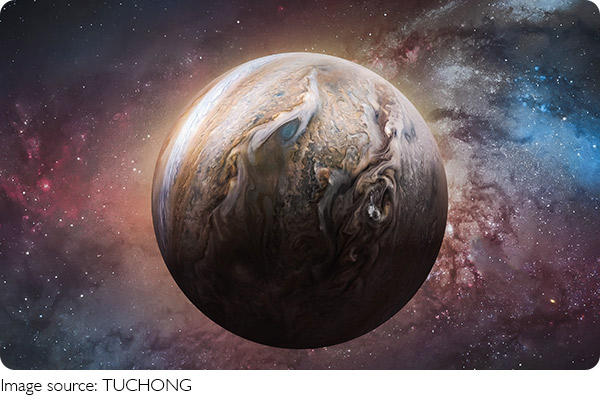
Now that June has arrived, the western sky becomes a stage for this slow cosmic approach—an invitation to look up, observe carefully, and witness a planetary encounter that will not repeat in quite the same way again for years.