Unlock Star Secrets

Nolan O'Connor
| 07-07-2025
 · Information Team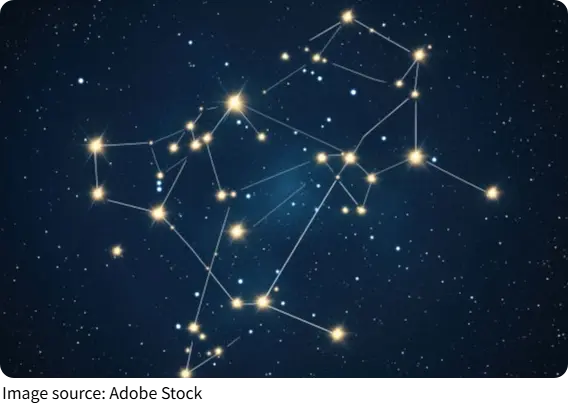
Have you ever wondered if you could spot your zodiac constellation in the night sky? We all have a zodiac sign based on our birthday, and it’s pretty cool to find it shining above us.
Tonight, let’s take a simple journey through the twelve zodiac constellations, learning how to recognize them with your own eyes.
Whether you’re new to stargazing or already curious, this guide will help you connect your birthday sign to the stars. So grab a cozy blanket, head outside after dark, and let’s dive in!
Aries: The Bold Ram in the Autumn Sky
Aries is a small constellation but shines bright with three main stars. The brightest one is called Hamal. You can find it in the fall, just east of the Pegasus constellation’s big square shape. Aries’ back legs stretch toward a small part of Taurus. The ram’s head is simple — almost like a few quick strokes in the sky — and when you turn your view, you’ll spot Taurus and some other constellations nearby.
What's Hidden In Your DNA May Predict A Heart Attack Risk—Is It Too Late To Act?!
Who's Shielded From Infection? The Hidden Secrets Behind Viral Immunity Revealed Here!
Ever wondered why ocean water is salty while rivers aren’t? Let’s dive into this salty mystery and break it down simply!
Can Robots Read Risk Better? Human Pride Or Code Logic—What Guides Your Future?!
Starting From Zero Feels Impossible? Here's How To Make It Real And Simple!
Stuck in a cycle that no longer serves you? Let’s flip the script—together.
Taurus: The Half-Appearing Bull
Taurus only shows half of its body in the sky, as if the other half disappears into the vast space. Its legs bend downwards beneath the body. A famous poet once described Taurus as a strong bull limping forward, tired and lying near the Big Dipper. When looking for Taurus, focus on its curved leg shape near the bright star cluster called the Pleiades.
Gemini: The Twins Lighting the Night
Gemini’s most noticeable stars are Castor and Pollux, also known as North River Two and Three. Castor is actually two white stars very close together, orbiting each other — what astronomers call a “binary star system.” Pollux is slightly more orange in color, making the twin pair easy to tell apart by their shade.
Cancer: The Quiet Crab
Cancer is the shyest among the zodiac signs — it doesn’t stand out much in the night sky. Its brightest star, Asellus Australis, is only about the brightness of a fourth-magnitude star, quite faint compared to others. But even though it’s not flashy, Cancer has its own charm and interesting features to discover if you look carefully.

Leo: The Majestic Lion of Late Winter
Leo represents the boldness many born under this sign share. In the northern sky, Leo lies between Cancer to the west and Virgo to the east. You’ll see it clearly during late winter and early spring nights. What stands out the most is Leo’s mane, which looks like a big, curved question mark or a giant sickle shape — very easy to spot once you know what to look for.
Virgo: The Noble Harvest Maiden
Virgo is one of the longest constellations in the sky, stretching about 46 degrees. It neighbors Leo, Boötes, and Corvus to the north, with Libra and Serpens to the east, and Leo and Corvus again to the west. Virgo symbolizes the goddess of harvest and contains over 500 star clusters and nebulae. It’s a constellation rich in starry wonders waiting to be explored.
Libra: The Small but Noticeable Scales
Libra is the smallest zodiac constellation, spanning only 21 degrees in the sky. It might not look spectacular, but it’s easy to find between two bright constellations: Scorpius to the east and Virgo to the west. You can spot Libra best in the spring and early summer night skies.
Scorpius: The Largest and Brightest Hunter
Scorpius is the biggest zodiac constellation. It’s made up of bright stars and is easy to recognize. Its front forms a curved arc, which is the head, while its long body stretches across the sky with a curved tail that hides slightly among the dense Milky Way stars. Look south in late spring and early summer evenings, and you won’t miss it.
Sagittarius: The Archer and His Bow
Sagittarius is depicted as a centaur aiming a bow and arrow. It features eight bright stars, grouped into two parts: the “Milk Dipper” which forms the centaur’s body, and the bow itself. At the tip of the bow, there’s a star called Kaus Australis. Sagittarius shines best in summer nights and is packed with interesting star clusters.
Capricornus: The Unassuming Flying Goat
Opposite Cancer is Capricornus, one of the least bright zodiac signs. Its brightest star, Deneb Algedi, shines about five times brighter than our sun and can be seen with the unaided eye. The constellation looks less like a goat and more like a flying bird or a triangular hat. July is the best month to observe Capricornus.
Aquarius: The Water Bearer Pouring Life
Aquarius often appears as a kneeling figure holding a jug of mysterious water, pouring it down to the ground. All its stars are fairly dim — the brightest only reaches third magnitude. Without moonlight, you can spot Aquarius in the southeast sky during autumn nights.
Pisces: The Long Ribbon of Fish
Pisces is one of the faintest zodiac constellations but is one of the longest, stretching about 41 degrees. It consists of two fish — the Northern and Southern Fish — connected by a ribbon forming a large “V” shape. At the tip of this “V” is its brightest star, Alrescha. Pisces can be a fun challenge to find for beginner stargazers.
Look Up and Discover
Exploring the zodiac constellations gives us a great chance to connect with the night sky and learn the stories behind our star signs. As we get more familiar with stargazing, spotting these constellations can make any evening feel more special. Next time you find yourself outside under the stars, take a moment to locate your zodiac sign and discover the constellations nearby. The sky is always ready for us to look up and uncover its mysteries together. So, Lykkers, which zodiac constellation belongs to you? Have you found it shining tonight?
What are Zodiac Constellations?
Video by YourPalClips